5 VC Fund Mechanics That Decide Which Startups Get Backed
I recently hosted a panel at Austin Tech Week on a topic that rarely comes up in Founder circles: how Venture Capital funds actually work. Before the panel, I delivered a keynote to an audience of 300+ entrepreneurs to show what happens behind the curtain and how VC fund mechanics impact their fundraising. This article comes out of that session.
Every fundraising conversation between a Founder and a VC is filtered through these 5 VC fund mechanics. The VC across the table is not only evaluating a team, a product, and a market; they are also running an internal checklist built from LP expectations, portfolio construction, time horizon, and personal incentives.
I have seen the cost of this on both sides: Founders walk out of “perfect” meetings and never hear back, unaware that the fund was constrained from the start. VCs meet teams they genuinely admire and still fail to get the deal through their own partnership. This piece comes from those conversations. It breaks down 5 VC fund mechanics that drive investment decisions, and shows how a better grasp of them can change the way Founders approach fundraising.
I am available for keynotes, panels, and private workshops on VC fund mechanics, LP/GP dynamics, and related topics. For speaking invitations or event collaborations on this or other Venture Capital themes, please get in touch via the contact form (click here).
In This Article
- #1. VCs Are Fund Managers First
- #2. Fund Economics Drive Risk Appetite
- #3. Exit Clocks Create Misalignments
- #4. Fund Size and Ownership Targets Decide If a Company “Moves the Needle”
- #5. Reserves Determine How Far a VC Firm Can Support a Company
- Conclusion: What These VC Fund Mechanics Mean For Fundraising

At Capital Factory’s Austin Tech Week 2025 with Brent Kelton (Moneta Ventures) and Nicole Glaros (Matchstick)
#1. VCs Are Fund Managers First
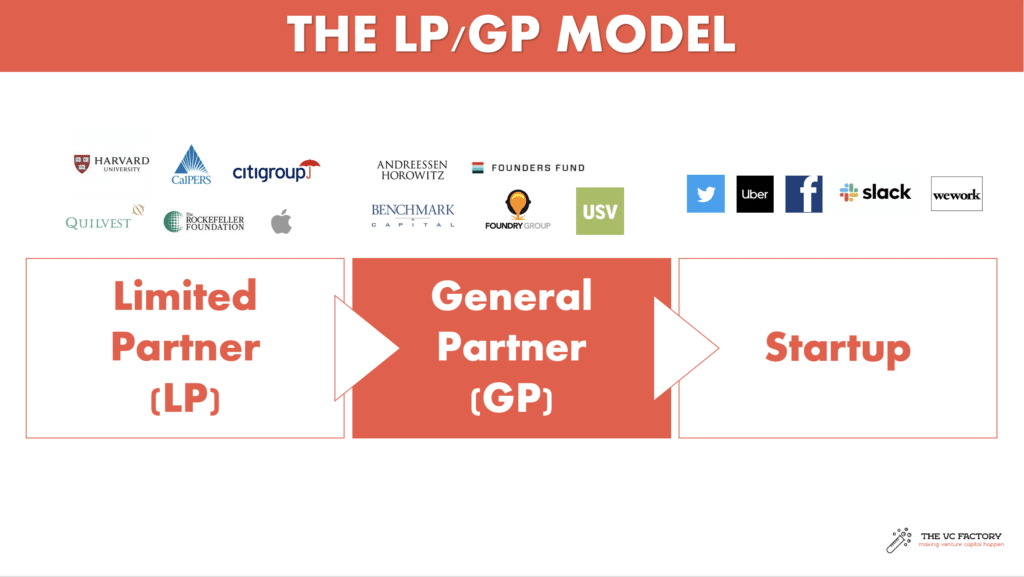
Venture Capitalists do not invest their own money at scale. They pool capital from “Limited Partners” (LPs) – pension funds, endowments, family offices, and corporates – who hand over investment decisions to the “General Partners” (GPs).
LPs want exposure to startups, but they lack the time or expertise to source and support individual companies, so they delegate that work to GPs. VCs sit in the middle, translating institutional constraints into a portfolio of startup bets.
When a Founder meets a VC, there is an invisible group of LPs sitting behind that partner, and their expectations shape what “good” looks like.
VCs are particularly successful at solving an important problem in market economies: connecting entrepreneurs with good ideas (but no money) with investors who have money (but no ideas).
Paul Gompers & Josh Lerner – The Money of Invention (2002)
To raise a fund, GPs first have to sell a very specific story to those LPs: stage, geography, sectors, typical ticket size, target number of companies, and risk profile. That story becomes the fund’s identity, which is why managers spend so much time crafting their investment strategy, or “thesis.”
Once the fund is closed, every new opportunity is compared to that investment thesis. In first screens and partner meetings, “fit with the fund’s investment strategy” tends to come before product, traction, or even market. A company that falls outside the promised stage, sector, or geography is almost impossible to back, even if the meeting goes well, because it forces the partnership to admit that it is deviating from the mandate LPs signed up for.
This identity is reinforced by formal documents and informal norms. LPs expect diversification across sectors and vintages, caps on exposure to a single name, and some discipline about not chasing every new theme at once. Inside the firm, partners negotiate how much they can stretch the thesis, how concentrated the portfolio can become, and where they need to add or reduce exposure.
A partner who champions a company outside the core grid has to spend political capital to secure an exception and takes personal “career risk” if the deal underperforms. Many rejections that sound vague on the surface make sense once this internal governance is visible.
For Founders, this means a pitch is never judged in isolation. The same startup can receive very different reactions from different funds, not because partners disagree about its quality, but because it fits neatly into one mandate and clashes with another.
A strong team operating in a category where the portfolio is already heavy may lose to a less impressive team in a category where the fund needs more exposure. The evaluation always happens in the context of the existing fund and the promises made to LPs.
The inverse is also true. When a company aligns tightly with the fund’s thesis, stage, and geography, the partner sees more than a good startup. The deal becomes a way to show consistency to LPs, deepen a theme the firm wants to own, and demonstrate that the fund’s strategy works in practice. In the investment committee, those opportunities are easier to defend: they “look like the fund,” which lowers the internal friction to saying yes.
Repeat VC-backed Founders approach fundraising with this first VC fund mechanic in mind. They treat early conversations as “fund diligence,” asking about LP base, fund size, deployment status, and where the firm wants to add exposure. They build a map of which funds can credibly back their type of company.
When a round goes live, experienced Founders describe their business in fund‑level terms, show how it extends the VC firm’s investment thesis, and make it straightforward for a partner to argue that supporting the company is the natural next move for the fund.
Key elements Founders should Research & Ask about VC fund mechanics
Most of the information below is available online. Make sure you do your homework before contacting a VC firm:
- Who the LPs are (institutions, family offices, corporates, fund‑of‑funds) and what that implies in terms of return expectations and governance.
- What investment thesis the fund has sold: stage, geography, sectors, typical ticket sizes, and diversification or concentration targets.
- Does your business proposition fit that investment thesis? If so, point to the salient elements.
- If not, how much flexibility do the partners have to stretch the thesis for exceptional opportunities?
#2. Fund Economics Drive Risk Appetite
The economic engine of a VC fund is simple on the surface.
Most funds follow some version of the “2 and 20” model:
- An annual management fee based on assets under management that keeps the lights on: salaries, office, travel, and all the invisible work it takes to run a firm
- A share of the profits, called carried interest or carry, once LPs get their capital back with a minimum return. Carry is the speculative upside that can change a partner’s life if a fund performs exceptionally well
Under the hood, the balance between fees and carry varies a lot across funds. Smaller, Emerging Managers sometimes accept lower fees in exchange for a larger share of carry because they want most of their wealth tied to long‑term performance. Others “front-load” the fees (e.g., 3.5% per year for four years, then 1% annually).
Large, established platforms often run fee‑heavy structures on big pools of capital, which creates a comfortable base salary regardless of whether the fund ends up in the top quartile or the middle of the pack.
GP commitments add another layer: partners who invest meaningful personal capital into their own funds (called the “GP Commit”) feel wins and losses more directly than those who do not.
The features of private equity funds — whether management fees, profit-sharing rules, or contractual terms — have long-lasting effects on the behavior of venture capitalists.
Paul gompers & Josh Lerner – The Venture Capital cycle (1999)
As Harvard’s Paul Gompers and Josh Lerner recognized decades ago, these incentive structures shape behavior long before VCs meet a Founder.
A partnership that leans heavily on carry and GP commit has a strong incentive to hunt for companies that can move the overall fund, even if that means higher volatility and more concentrated risk.
A partnership that leans heavily on fees can afford to be more conservative, spreading bets and avoiding anything that might jeopardize a stable franchise. When a new opportunity comes in, the question is not only “Is this a good company?” It is also “Does this outcome profile justify the time and risk for this fund, given how we get paid?”
Fund economics also affect who inside the firm leans into a deal. A senior partner with a large carry stake and significant GP Commit thinks differently from a junior partner with little carry and a salary driven by management fees. The senior partner may be more willing to back a non‑obvious, high‑beta team if the upside can transform the fund. The junior partner may focus on safer consensus deals that are easier to sell internally and less likely to create career risk if they fail.
Founders who internalize these VC fund mechanics change how they present their story. They still walk through product, team, and traction, but they also translate their plan into fund math: potential ownership at different stages, plausible exit ranges, and what those combinations mean in dollars returned to the fund. They effectively answer an unspoken question: “If this works, how much will this matter for this specific fund, given its fee and carry structure?” That is the language investment committees use when they decide whether to allocate scarce risk budget to a new company.
Key elements Founders should Research & Ask about VC fund mechanics
This is tricky territory, as fund economics are typically kept confidential. You’re unlikely to find information on management fees and carry, let alone carry per partner. However, you can guesstimate using the following rules of thumb:
- Small funds (< $500 million) tend to optimize for carry, while large funds (esp. $1 billion+) live comfortably off the management fees
- The number of partners per fund also matters: a solo GP managing $50 million nets $1 million in fees per year, with enough left after other expenses for a comfortable salary. Conversely, a $250 million fund with 10 partners will struggle to pay them well. Refer to my article on VC compensation for more details
- Ask how decisions are made in the investment committee: voting power is a good proxy for carry levels
- Listen to how partners talk about past successes: do they emphasize realized exits and fund‑level returns, or mostly mark‑ups and paper gains? That reveals whether carry has been a real driver for them
#3. Exit Clocks Create Misalignments
A VC fund is a time‑boxed vehicle. Most are set up with a life of around ten years: the first three to five years are the “investment period” for new deals, then the focus shifts to follow‑ons, governance, and exits.
Management fees usually step down over time. For instance, they can be set at 2% per year during the investment period, then go down to 1%. As a fund ages, the fee base shrinks. To keep the lights on, partners need to raise a new fund before the previous one runs out of fees.
Raising that next fund requires more than a new thesis slide. LPs want to see evidence that the current fund works: marked‑up companies, realized exits, and a distribution profile that looks credible for the stage and strategy.
In my work on DPI (the cash returned to LPs), I showed how long it often takes for early‑stage funds to return even 1x cash to LPs, and how most of the visible progress in the first years comes from paper gains rather than distributions. That lag makes the timing of exits, secondaries, and “proof points” central to how partners think about portfolio companies.
Young venture capital firms have incentives to grandstand. […] They bring companies public earlier than older venture capital firms in an effort to establish a reputation and successfully raise capital for new funds.
PAUL GOMPERS – HARVARD BUSINESS SCHOOL (SOURCE: JOURNAL OF FINANCIAL ECONOMICS)
This is where “exit clocks” and grandstanding come into play. Exit clocks are the informal timelines partners carry in their heads: by year X, the fund needs clear winners; by year Y, it needs cash back (also called distributions).
Grandstanding adds another layer: especially for younger firms about to raise Fund II or Fund III, there is a strong temptation to accelerate visible exits or high‑profile mark‑ups to impress LPs, even if the underlying companies would benefit from staying private longer. Research shows that grandstanding is a strong factor in misaligning interests between VCs and Founders.
How do exit clocks affect how VCs evaluate investment opportunities? Early in a fund’s life, partners have more time and more “risk budget”, so they may be willing to back companies with long product cycles, heavy R&D, or complex regulatory paths. As the fund ages, the same partners may favor businesses with clearer unit economics, shorter times to meaningful revenue, or easier paths to a trade sale.
The internal question is less “Is this exciting?” and more “Can this reach a credible milestone or exit while this fund is still alive?”
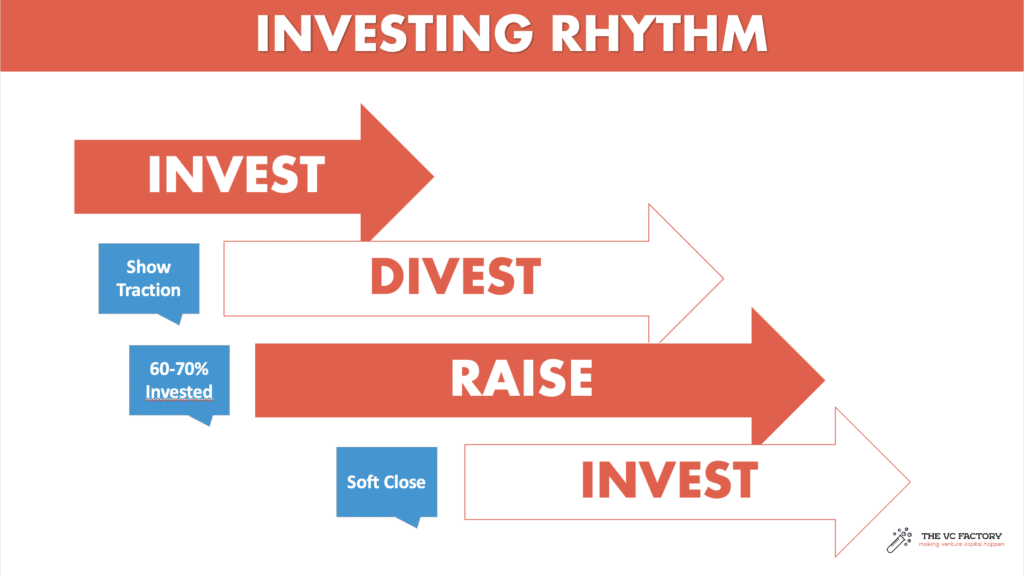
The need to raise the next fund can create sharp misalignments between GPs and Founders. A Founder with a ten‑year horizon on a mission‑driven or infrastructure business may want to reinvest cash and delay liquidity, while a GP preparing to hit the road for Fund III in two years may push for a sale, a partial secondary, or a visibility event that produces attractive DPI.
Secondary markets and continuation vehicles exist partly to soften this conflict, but they do not remove the underlying pressure; they only reassign who holds the risk for longer.
When a startup’s natural timeline sits far beyond the life of the fund, everyone is implicitly betting on future funds, secondaries, or restructurings to bridge the gap.
When the timeline fits cleanly inside the fund’s life, the conversation about exits tends to be more aligned. Elite VC firms like Sequoia have recognized this dynamic and launched evergreen vehicles, unconstrained by time limits and able to capture post-IPO value accretion.
Key Elements Founders Should Research & Ask About VC Fund Mechanics
Here’s a list of questions fundraising Founders should ask early in the relationship with a VC firm, once a rapport is established:
- Ask which specific fund would invest in the round, what year it was raised (vintage), and how far that fund is into its investment period.
- Ask whether the firm is currently raising or planning to raise its next fund. That indicates where partners are in their own “grandstanding” cycle and how much pressure they feel to show DPI.
- While it’s challenging to ask about returns, you can broadly discuss if the GP is happy with its fund’s current valuation, and try, based on public exits, to understand how much of the performance is on paper vs “real.” Read my article Venture Capital Returns: True Lies? to understand the subtleties of VC portfolio valuation.
- Ask how the firm typically handles companies that outlive a fund’s legal life: secondary sales, continuation vehicles, or passing the position to later funds in the franchise.
- Listen to how partners talk about exit timing for comparable companies: whether they celebrate early liquidity events or long compounding journeys tells a lot about how their internal exit clock is set.
#4. Fund Size and Ownership Targets Decide If a Company “Moves the Needle”
Fund size sets the scale of the game for a VC firm. A €50M seed fund, a €250M early‑stage fund, and a multi‑billion‑dollar platform do not live in the same universe. How much to raise is the first and most determining step in “portfolio construction,” the exercise every GP should pay close attention to before launching a new fund.
Size determines check sizes, diversification (how many portfolio companies the fund can hold), and how much ownership partners need in each name for the math to work. Once these parameters are set, the VC firm can estimate how much money a winning investment must return to matter when they succeed.
In my work on the power law in Venture Capital, I showed that inside most funds, a small minority of investments generate the bulk of returns, while the rest barely move the aggregate outcome. A handful of companies carry the fund, and everything else is noise.
That logic pushes partners to concentrate capital and attention on positions where they can own enough of the upside to ensure a big exit translates into meaningful cash back to LPs.
The same phenomenon appears at the level “above.” A small number of funds produce a disproportionate share of the asset class’s total gains, often thanks to one or two companies that effectively pay back an entire fund. I called this the “super power law” and showed how missing a single outlier in a given vintage can be enough to derail a firm’s ability to raise its next fund.
Your fund size is your strategy.
Mike Maples Jr (Floodgate Ventures)
In day‑to‑day evaluation, this “move the needle” constraint shows up as questions VCs ask about market size, scalability, and plausible exit scenarios. Partners are back‑solving into fund‑level math: with this fund size and target ownership, what does this position have to be worth for it to matter?
The same 3–5x outcome that feels life‑changing to a Founder can feel irrelevant to a GP who needs one or two 20–30x positions for the fund to work. When I wrote about the “Not Moving The Needle” criterion, I described how many polite no’s are really just this calculation in disguise.
This is why different funds react so differently to the same company. A multi‑stage platform managing several billion may not be able to justify leading a small pre‑seed or seed round; even if the startup performs very well, the proceeds will barely register at the fund level. Feedback drifts toward “you’re too early” or “come back when the round is bigger,” because only larger tickets and higher ownership can create a meaningful outcome for that vehicle.
However, a focused €50–100M seed fund can look at the same opportunity and see a credible path to a fund‑returning position at 10–15% ownership and a €100–200M exit.
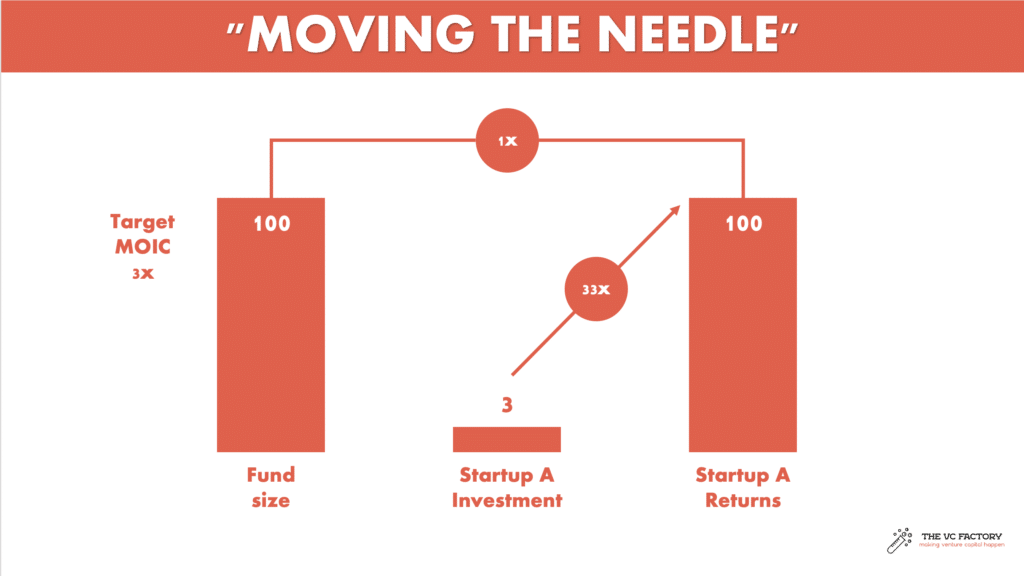
Fund size and ownership targets also shape negotiation around valuation and round structure. When a fund needs 15–20% ownership to justify the work on a company, high entry valuations or crowded cap tables force uncomfortable trade‑offs. Either the fund accepts a smaller stake that may never move the needle, or it pushes for a larger round or a lower price to get back to a meaningful percentage. That is why some partners insist so much on “owning enough of the company”: they are really trying to protect the fund‑level outcome.
Key Elements Founders Should Research & Ask About VC Fund Mechanics
Again, Founders who internalize this VC fund mechanic frame their deal’s parameters in a way that provides a VC partner with a concrete story to take to the investment committee:
- Map the approximate size of the current fund and the typical check sizes it writes at Seed, Series A, and beyond. Public announcements and database entries are usually enough to estimate this.
- Clarify the ownership range the fund aims for at the stage of the round (for example, 10–15% at Seed, 15–20%+ at Series A), and whether it is willing to start slightly below target if it can build ownership later.
- Ask partners what a “fund returner” looks like for this specific vehicle: what exit range, at what ownership, starts to materially change the fund’s overall performance.
- When preparing the deck, translate the plan into one or two explicit fund‑math scenarios that show how a successful exit from this company could help the fund achieve its return targets and narrative for the next raise. Note: some VC firms don’t like Founders who talk about exits too soon; in that case, subtly distill info that will help the partner run their own calculations
#5. Reserves Determine How Far a VC Firm Can Support a Company
Reserves are the portion of a VC fund kept aside for follow‑on investments in existing portfolio companies rather than for new deals.
In a typical portfolio construction, a fund might allocate, for example, 50–60% of capital to initial checks and the rest to follow‑ons. The exact split varies, but the principle is the same: partners commit up front to how much capital they want available to defend ownership in winners, support companies through rough patches, and participate in future rounds.
In my work on how LPs evaluate Emerging Managers, I showed that sophisticated LPs spend a surprising amount of time on this question. They ask about the initial vs. follow-on split, how many rounds the fund expects to support, and whether reserves are concentrated in a few names or spread thinly across the portfolio.
Reserve levels are typically decided up front because they are a crucial part of the investment thesis, particularly in how the GPs see value creation, time allocation, and support. It is a VC fund mechanic that impacts money at work, diversification vs. concentration, and investment pace. Too little, and the fund gets diluted in its best companies; too much, and not enough new names enter the portfolio.
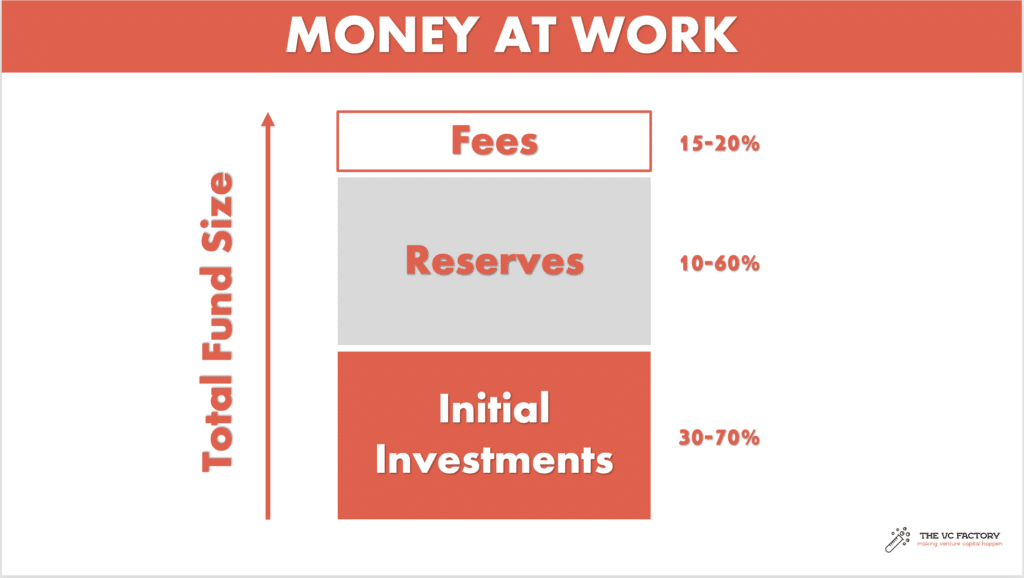
Reserves are rarely pre‑allocated to specific companies. They form a shared pool across the whole fund, which is why follow‑on decisions often feel like triage.
When reserves start to run low, every new round forces trade-offs among companies: doubling down on one means less capital will be available for others. In that context, capital‑intensive business models, frequent bridge rounds, or unclear paths to the next financing become harder to support, regardless of how much a partner likes the team or the product.
Reserve discussions among a VC firm’s partners impact their investment decisions in ways that Founders rarely see. When a fund looks at a new deal, it does not only think about the first check; it mentally attaches one or two future rounds to that commitment. A partner asks: “If we lead this Seed, do we have enough capital to follow our pro‑rata at Series A and maybe Series B, without starving the rest of the portfolio?” A fund that is already reserve‑constrained may still invest, but it will hesitate to promise strong participation in future rounds, or it will underwrite only one more check instead of two.
Reserves also drive behavior around bridges and “good money after bad”. In my piece on bridge financing, I described how the hardest decision in Venture Capital is whether to extend more capital to a struggling company or keep those reserves for healthier names. Reserves give VCs the option to support a company; they do not oblige them to use it. Loss aversion, sunk‑cost fallacy, and escalation of commitment all show up when partners decide whether a bridge round is a lifeline or a trap. The more limited the reserves, the more brutal these choices become.
For Founders, the key point is that pro‑rata rights and nice words about “being long‑term partners” only mean something if the fund has both the capital and the internal conviction to act on them. A fund with ample, deliberately managed reserves can lead or support multiple rounds and defend its stake in crowded up‑rounds. A fund that is thin on reserves might still be very helpful operationally, but will quietly disappear from later cap‑table math.
Understanding which situation applies changes who a Founder expects to be in the syndicate for the next round and who might realistically participate in a bridge if things go sideways.
Key Elements Founders Should Research & Ask About VC Fund Mechanics
VCs rarely advertise their reserve levels, but a few targeted questions may help surface what matters:
- Ask, at a high level, how the fund splits capital between initial investments and follow‑ons (for example, “roughly half/half” or “about one‑third for new deals, the rest for follow‑ons”). You do not need exact numbers; you want to know whether there is real follow‑on capacity.
- Ask how the firm thinks about pro‑rata: do they aim to defend their ownership aggressively in winners, or do they mostly follow on in a subset of companies? Past behavior in prior funds is often a better guide than theoretical policy.
- Discuss explicitly how many rounds the fund expects to support and what share of its pro‑rata it plans to take if things go well. That conversation is uncomfortable, but it is better to have it early than to discover later that there is no fuel left.
Conclusion: What These VC Fund Mechanics Mean For Fundraising
Understanding the five VC fund mechanics discussed in this article – the LP/GP model, the economics of fees and carry, fund lifecycle and exit clocks, fund size and ownership targets, and reserve allocation – helps fundraising Founders increase their likelihood of getting VC funding.
The most decisive fundraising moments I have witnessed share the same pattern. The Founder has done the work to understand who sits behind the fund, what story was sold to LPs, how much capital is left to deploy, and what kind of exit would truly move the needle at the fund level.
The discussion then becomes very concrete: a place in the portfolio, a path to ownership, a timeline that aligns with the fund’s life, and a capital plan that the reserves can realistically support. Respect goes up on both sides, and noise goes down.

On the last slide of my talk at Austin Tech Week, I used a simple message: “Listen & Learn.”
I advised the 300+ Founders in the audience to plan early “coffee meetings” with VCs and ask them about all these key questions well before the road show starts. The Founders who treat those meetings as a chance to map VC fund mechanics, not just to pitch their startup, arrive at the raise with a clearer picture of where they fit and how to tell their story.
Nothing in this article is reserved for insiders. Any Founder willing to listen, learn, and do the work can turn these VC fund mechanics into a fundraising edge.