Into The Mindset Of Power-Law Masters (Part 1: Intuition)

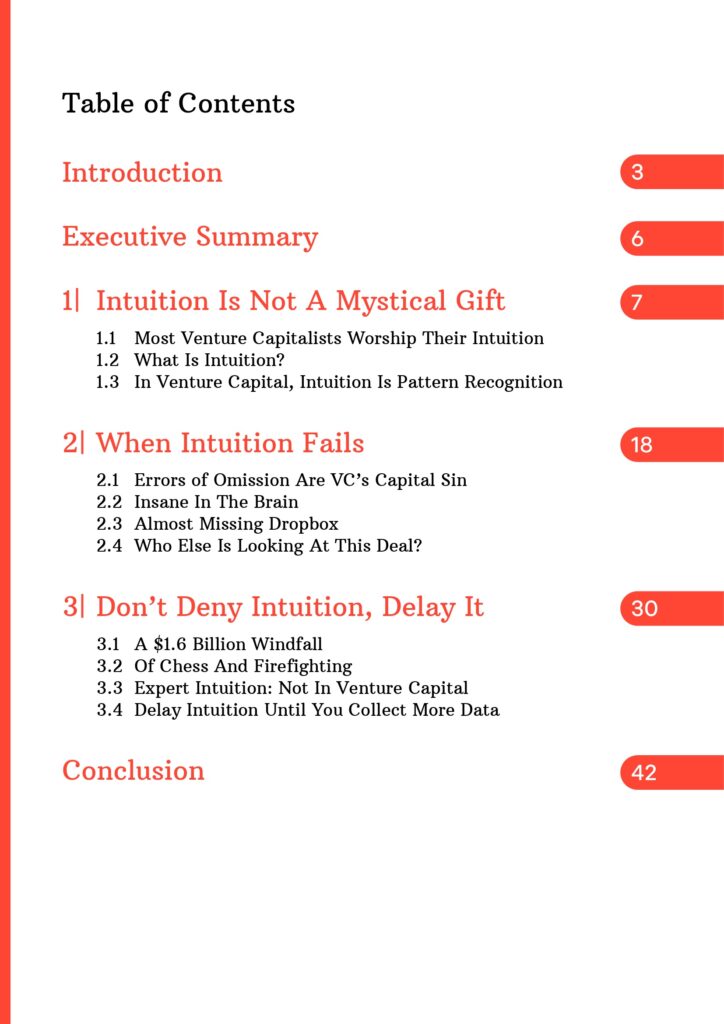
Venture Capital is one of the few professions where a gut feeling can be worth billions, but where the same intuition can veto the very outliers that define exceptional careers.
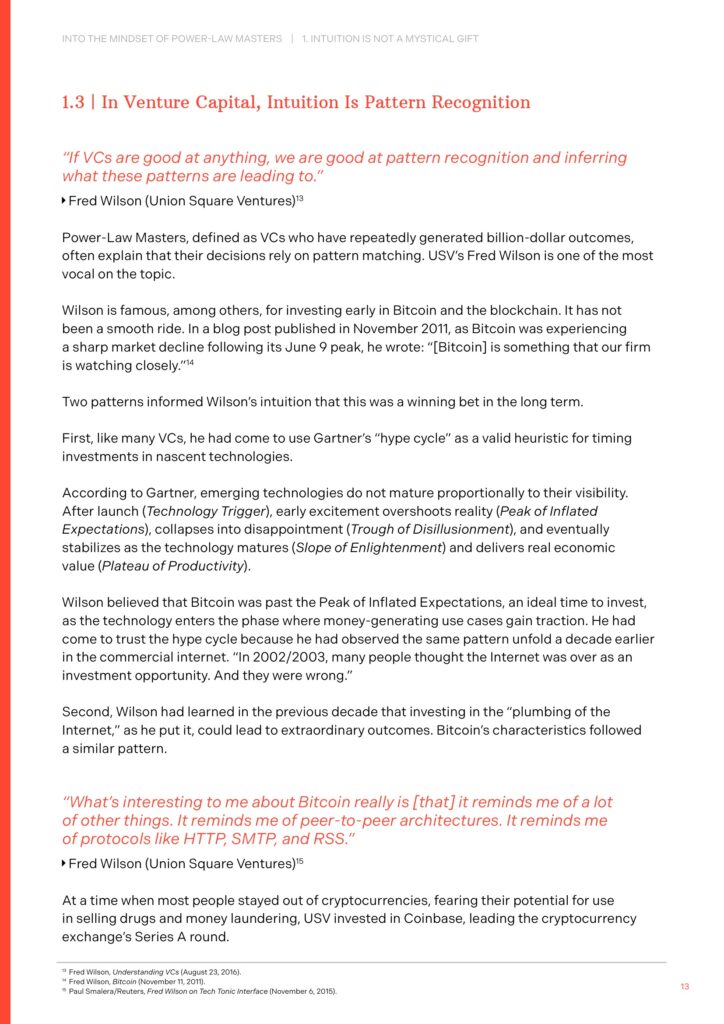
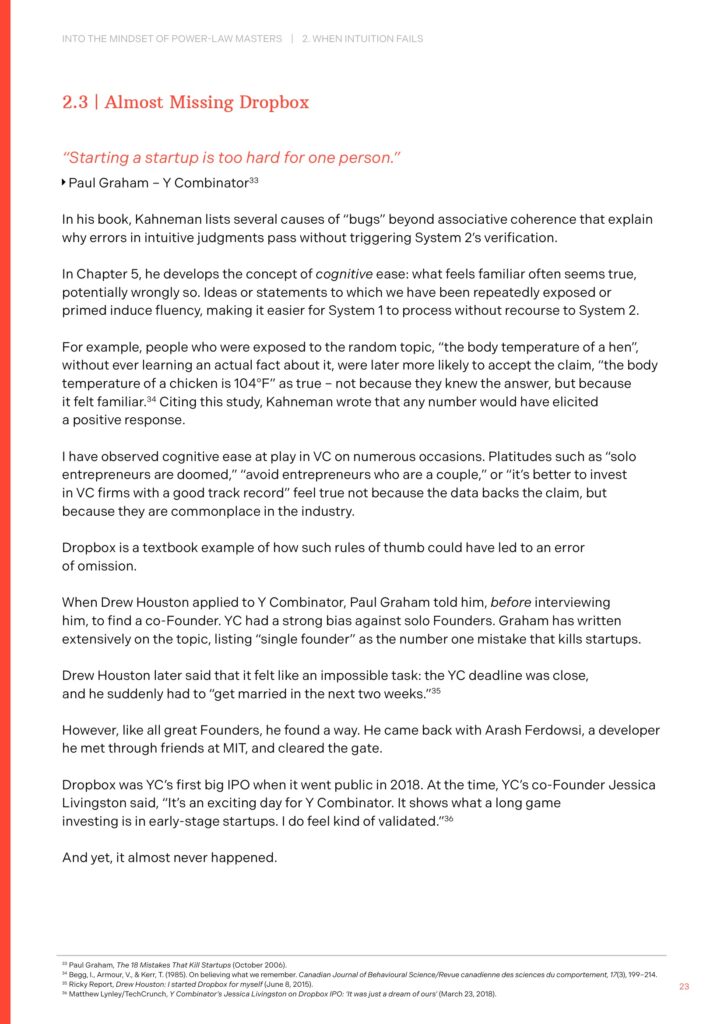
Josh Kushner (Thrive Capital) investing in OpenAI when nobody else did, Brad Feld (Foundry Group) making $1.6 billion from FitBit despite first passing on the Series A, Bill Gurley (Benchmark) missing a 10,000x return from Google, and Paul Graham (Y Combinator) almost missing Dropbox… all these stories have something in common: the role their intuition played in these Investors’ ultimate decision.
What is intuition, and should VCs trust it?
This report is the first installment in a three-part inquiry into how Power-Law Masters, the rare Venture Capitalists who repeatedly generate billion-dollar outcomes, make investment decisions.
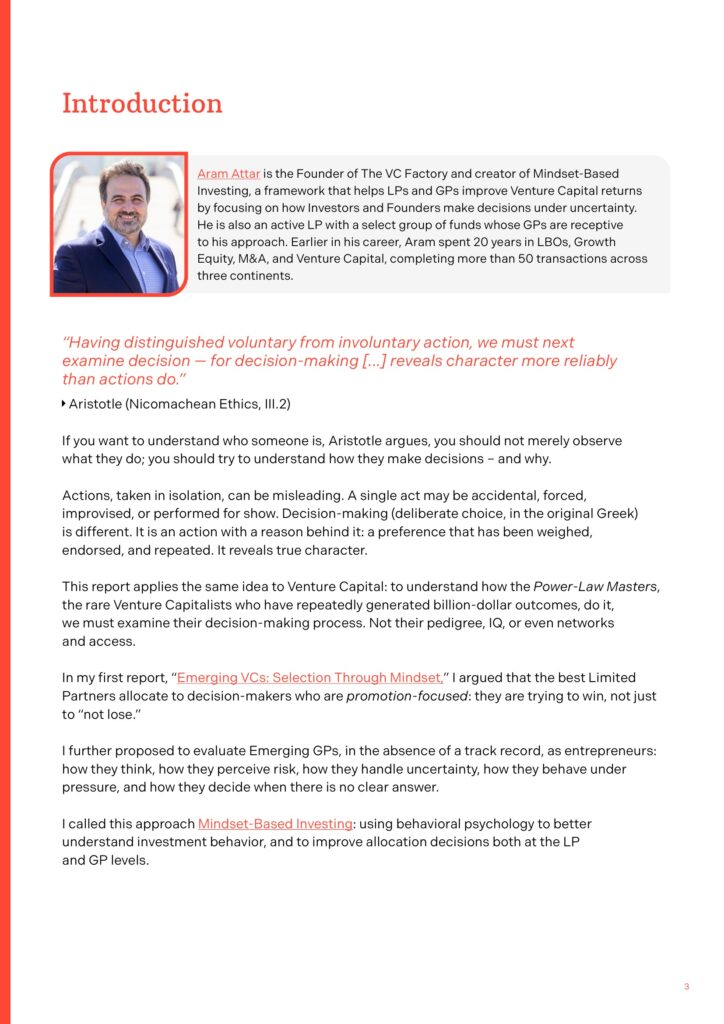
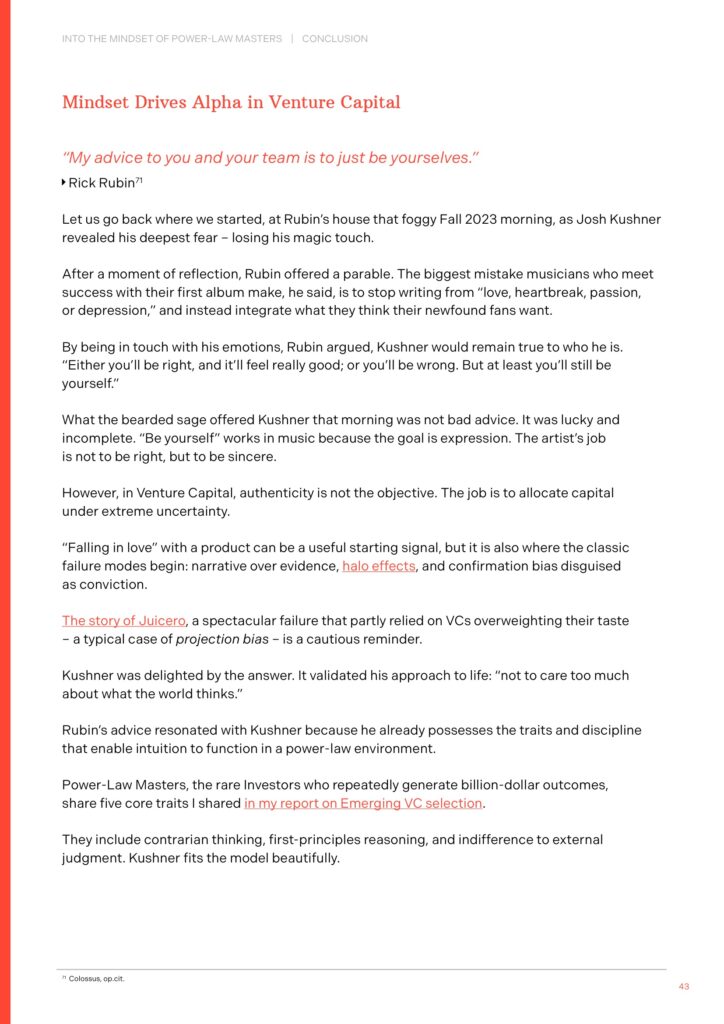
It introduces my framework, Mindset-Based Investing, which argues that mindset drives alpha in Venture Capital: outlier outcomes come from how Investors see the world — not their IQ, networks, or analytical chops.
In Part 1, I focus on the first step in the decision process: intuition.
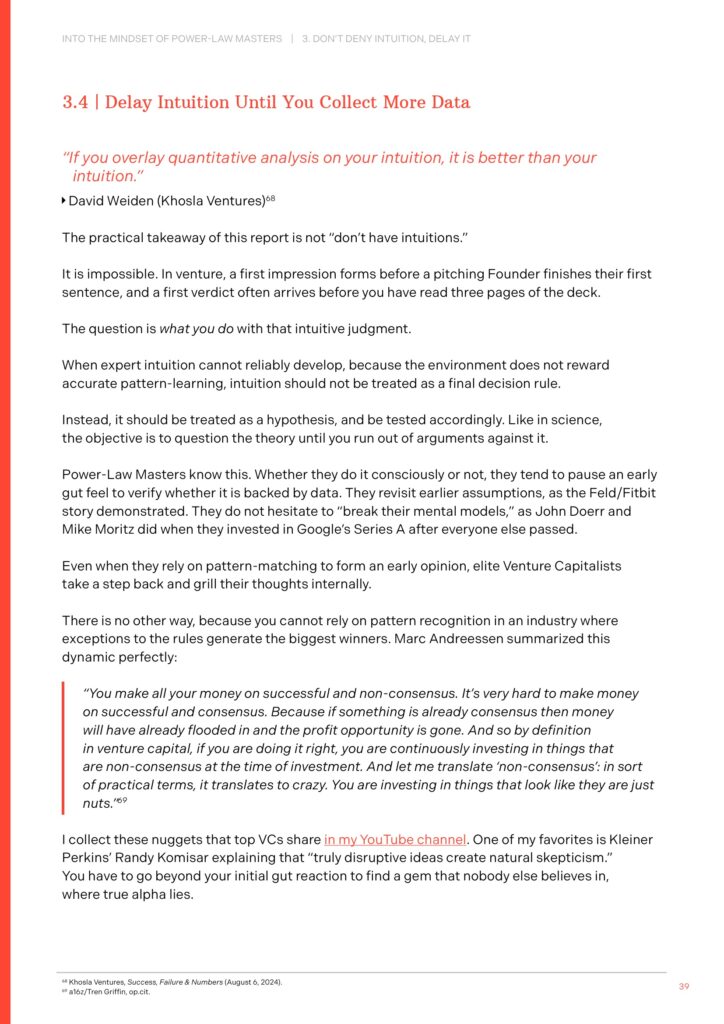
The central argument is simple: intuition should not be treated as a decision rule. It should be treated as a first draft. In a power-law market, capital allocators should delay intuition until more information has been collected.
The report combines Venture Capital case studies and primary interviews with leading Investors with peer-reviewed research in decision-making and behavioral psychology.
Click below to read the full report.
This report is regularly updated with new content (interviews with top LPs, GPs, and ecosystem leaders).
Email verification required. Please do not use from an incognito window.
Main Findings
- Intuition is not a mystical gift. It is pattern recognition: the brain’s fast, experience-based attempt to make sense of a situation under extreme uncertainty.
- In Venture Capital, pattern recognition is not enough to spot the outliers who live at the margin and do not conform to the norms.
- Intuition-based investment decisions lead to predictable errors. Intuition automatically produces a compelling answer, and the “reason police” fails to notice that it is wrong.
- Accepted narratives produce “brain bugs” that negatively impact decision-making. Common practices such as investing in nice entrepreneurs, avoiding solo Founders, or caring about who else is looking at the opportunity prevent allocators to generate alpha.
- Expert intuition is real, but it requires a regular environment and fast, reliable feedback. Early-stage Venture Capital does not offer those conditions, so you must treat intuition with caution.
The practical lesson is not to deny intuition, but to delay it. Treat the first read as a hypothesis, collect independent information, and only then allow a global judgment to form.
Read This Report If You’re:
- A VC who wants to improve their decision-making under uncertainty
- A Limited Partner evaluating GPs’ potential for making outlier investments
- A Fundraising Founder wishing to understand how Investors form early judgments
- Interested in how billion-dollar investment decisions are made
Sample Pages
Click on each image to enlarge it.
I hope you enjoy this report. I will add interviews with exceptionally successful VCs in the coming months, so I hope we will see you again here soon!
Make sure you sign up to my newsletter to receive the updates and the next installments in this series.