Don Valentine: The Mindset Behind Sequoia Capital
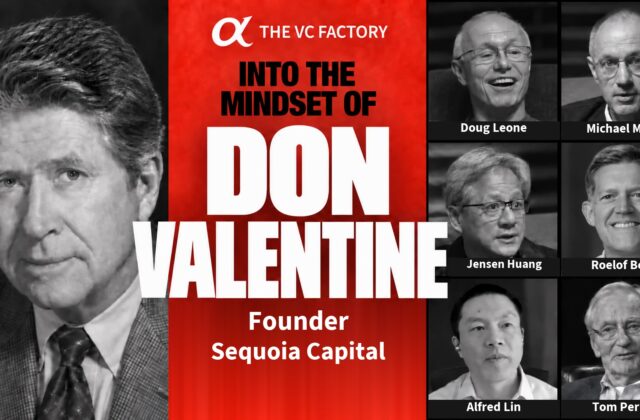
Don Valentine founded Sequoia Capital in 1972. He backed companies such as Apple and Cisco, recruited and taught legendary Investors such as Michael Moritz and Doug Leone, and helped build a Venture Capital partnership that continued to produce exceptional investments after he stepped back. Much of Sequoia’s enduring success comes from Don Valentine’s mindset.
I wanted to understand how he did it. What questions did he ask? What did he see in people others dismissed? And how did his approach become part of the way Sequoia made decisions?
For years, I have studied the rare Venture Capitalists who repeatedly generate billion-dollar outcomes. I call them Power-Law Masters. My research keeps bringing me back to the same question: how do they make investment decisions when the evidence is scarce and the future is uncertain?
That question led me to develop Mindset-Based Investing, a framework to catch outliers in venture investing. I examine how Investors form an initial impression, collect information to test it, and decide with the potential upside in mind.
“Into the Mindset of” extends this research through a series of documentaries. Each film studies a Power-Law Master through their own words and the recollections of people who worked with them.
I begin with Don Valentine, often called the “grandfather of Silicon Valley.”
Into the Mindset of Don Valentine
This documentary brings together archival interviews and recollections from Michael Moritz, Doug Leone, Roelof Botha, Alfred Lin, Jensen Huang, and others. It follows four themes at the core of Don Valentine’s success: asking and listening, evaluating Founders, hiring Investors, and setting an example.
1. Ask & Listen
Roelof Botha, Sequoia’s “Senior Steward” between 2022 and 2025, remembers Don Valentine sitting through an hour of conversation, listening and absorbing before asking precise questions. He had no need to fill the silence.
Doug Leone, who co-led the firm with Mike Moritz between 1996 and 2012, then led it until 2022, learned that lesson early. After a Founder presentation ended, Valentine left him a note in his characteristic green ink, telling him he was still unfit to listen to Founders.
Leone explains that the criticism concerned the way he had questioned them. Many VCs make this mistake, asking plenty of questions but making it harder for a Founder to explain their vision.
We’re not there to compete with the founders about who knows more about something.
Don Valentine (03:38)
Valentine explains that Sequoia often understood little about the product or market at the start of a meeting. He learned to arrange his questions so that a Founder could explain the idea, the competition, the time required, and the financing needed without feeling threatened.
He expected the people Sequoia financed to know more about their business than he did. That willingness to listen continued after an investment failed: in postmortems, he asked which question Sequoia had missed and which answer it had misunderstood.
This connects directly to my research. Most Power-Law Masters tolerate failure and see it as an opportunity to learn, to fix one thing that didn’t work. It’s also a core trait in successful Founders.
2. Evaluate Founders
Valentine’s curiosity extended to why a Founder wanted to build a particular company. Alfred Lin, who’s been co-leading Sequoia alongside Pat Grady since 2025, describes how questions about a person’s life helped Valentine understand the connection between their experiences and the company’s mission.
Lin explains that a problem the Founder had personally experienced could give them a reason to keep going through hard times. The main driver behind entrepreneurial success is deeply connected to a Founder’s history.
Valentine looked for technologists whose ambition was to solve a problem and create a product, with wealth following as a consequence. Recognizing those people required looking beyond how pleasant they were to meet. It’s why he invested in Apple, when most Investors at the time thought Steve Jobs and Steve Wozniak unappealing.
Look for the exceptional people who are not so easy to get along with.
Roelof Botha (05:38)
Early in Botha’s time at Sequoia, Valentine pulled him aside and described a matrix: exceptional and unexceptional people on one axis, easy and difficult people on the other. He asked Botha to work out which of the four groups usually made Sequoia money.
As I described in my report on intuition in VC, personal discomfort can interfere with an Investor’s ability to recognize talent. Being difficult establishes nothing about a Founder’s ability; the task is to understand what makes the person exceptional and whether that ability matters for the company.
In fact, many of the most successful entrepreneurs in history are notoriously difficult to work with.
NVIDIA’s Jensen Huang wears it as a badge of honor:
If you want to do extraordinary things, it shouldn’t be easy.
Jensen Huang – NVIDIA
I explored the opposite problem in my article on Juicero and Founder charisma, where an appealing personality lured VCs to commit despite evidence that the product served a niche market.
In both situations, the Investor needs to examine how their reaction to a person affects their judgment.
3. Hire the Right People
Don Valentine recruited some of the legendary VCs of the next generation, including Mike Moritz, who backed Google, PayPal, and Stripe, and Doug Leone, who backed ServiceNow, Nubank, and RingCentral.
Doug Leone’s interview with Valentine began with a broad question about what mattered. Leone spoke for seven or eight minutes, then sat through a long silence before Valentine asked what else he could add.
Leone admitted he had given everything he knew. Looking back, he believes that candor, together with his sales background, helped him get hired.
Mike Moritz arrived with a different background: a history degree, a career in journalism, and no experience working inside a Silicon Valley company. Four of the five firms he approached rejected him; Valentine gave him an opportunity.
Don didn’t have a fixed view of what it took to be successful in the venture business.
Michael Moritz (10:42)
Moritz had asked Valentine what success in Venture Capital required. Valentine admitted he did not really know: people with deep technical knowledge, operating experience, or a record of running businesses had sometimes disappointed him.
Others had succeeded without those credentials, including Arthur Rock, who had neither a technical background nor experience working in a technology company. Valentine’s experience gave him reasons to question the usual selection criteria and consider someone like Moritz.
This echoes my work on selecting Emerging Managers. A résumé offers facts about someone’s past; understanding how that person thinks requires a closer look at their choices, their questions, and their response when they do not know the answer.
Hiring independently minded people creates another problem: getting them to work together. Doug Leone describes Sequoia’s emphasis on sharing success and taking personal responsibility for failure, while Shaun Maguire recalls how that approach even shaped the language of investment memos.
4. Set the Example
The picture that emerges from Don Valentine’s interviews and recollections from the people who worked most closely with him is that of a focused yet generous person who genuinely cared about the success of others.
Valentine gave people room to improve. When Leone struggled early at Sequoia and faced dismissal, Valentine argued for giving him more time, an intervention Leone also recounts on his Sequoia profile.
Jensen Huang remembers another form of encouragement: Valentine mailed him newspaper clippings about NVIDIA with a short handwritten message of praise. His attention to people continued long after the initial investment.
Your only job is to leave it better than you got it.
Don Valentine (13:15)
Pat Grady describes how Valentine handed Sequoia to Doug Leone and Michael Moritz without requiring them to buy him out. That instruction accompanied the handover: the next generation would be responsible for improving what it inherited.
Leone remembers watching Valentine step back, let younger partners run the firm, and speak only when asked. Sequoia’s tribute to Valentine also recalls how he remained available for advice without interfering in the business.
I see a consistent demand in these stories. Valentine expected people to take responsibility, gave them opportunities to develop, and eventually trusted them to exercise their own judgment.
Conclusion: What I Learned From Don Valentine
Studying Don Valentine brought me back to several questions I ask in my research. Can an Investor listen long enough to understand an unfamiliar idea? Can they recognize ability in someone they find difficult? Can they reconsider the background they believe success requires?
Valentine’s stories give those questions concrete form. They also show how an Investor’s mindset can influence the people they recruit and the partnership they leave behind.
This is what I want to explore through “Into the Mindset of”: how exceptional Venture Capitalists think, learn, and make decisions. Don Valentine is the first portrait. Others will follow.
Follow my YouTube channel to get the next installments as they are published!