Martin Tobias (Incisive Ventures): Investing in 6 Unicorns, Raising A Fund II, And Selecting Founders At The Poker Table
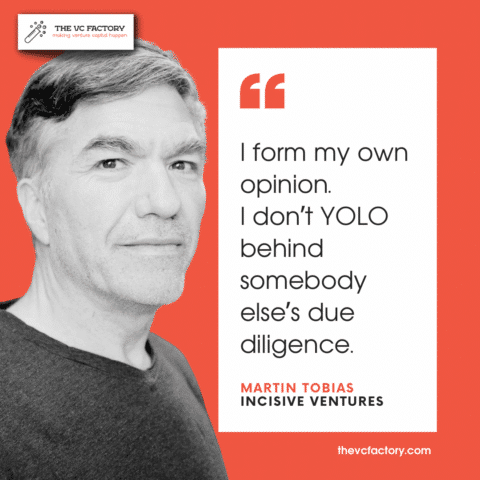
Martin Tobias is one of the most focused pre-seed Investors out there. He has backed six unicorns while running a tight solo-GP machine that saw ~4,500 decks last year and wrote 11 checks. Before starting Incisive Ventures, he built three VC-backed companies, raised $500 million, and took two of them public. Martin is also an LP in 18 VC funds and an Angel in 250 startups.
Despite the solid track record and the accolades, Martin is what we call, in the trade, an Emerging Manager. After a $10 million fund I he launched in 2021, he’s now raising a $25 million fund II. If you’re not familiar with how Limited Partners (people or institutions who invest in VC funds) make allocation decisions, you’d think this is a no-brainer: an experienced entrepreneur with a solid track record as an Investor, it doesn’t get better than that.
You’d be wrong. Although Martin’s already well on his way to reaching his fund target, this is one of the shittiest markets for VC fundraising in a long time, and many talented Emerging GPs struggle to raise capital. So, I’m writing this post to explain to my fellow LPs why I decided to invest in Incisive Ventures II and to illustrate how Mindset-Based Investing can help identify industry outliers. Fundraising GPs will gain insight into the LP allocation process, and Founders will understand more clearly how a VC selects investments.
TL;DR: Don’t rely on track record alone; focus on the GP’s mindset. In particular, analyze how they make investment decisions. It gives you a window into their personality, a crucial aspect of VC performance. I’ve written a series of reports on why and how to do it, quoted in context below.
Martin Tobias: A Potential Power-Law Master
In my report, “Emerging VCs: Selection Through Mindset“, I defined a Power-Law Master as an early-stage Venture Capitalist who returns $1 billion+ more than once.
If you’re an LP in VC funds, these are the only Investors you want to target. Given the super power law at play in the asset class, you must aim for the top-decile VCs or nothing.
How do you find them? Most LPs rely on track record, but it’s a horrible way to pick VC managers.
First, there is less persistence in Venture Capital than many LPs assume: it is far from obvious that a VC firm’s next fund will perform as well as its last. Many LPs incorrectly believe that performance is repeatable across fund vintages because of the VC’s superior IQ, pedigree, or access — rather than driven by luck, timing, or a multitude of other variables. The empirical evidence here is mixed at best. (I’m writing an article about this, check the Essays section as it may already be there when you read this.)
Second, Emerging LPs rarely get allocation into the “best” funds. In a recent LP survey, this ranked as the second-biggest challenge they reported. As Carta’s Peter Walker confirmed when we spoke, “established brands such as Sequoia, Benchmark, and a16z rarely accept newcomers.”
Here’s what LPs who want exposure to the VC asset class should do instead: focus on the GP’s mindset. It’s what the best LPs backing Emerging Managers do. It’s not as easy as looking at a bunch of numbers, and most people feel they need a psychology degree to peer into someone’s mind.
Yet, mindset is what separates elite VCs from the rest, so it’s worth spending time to better understand how to evaluate it. Let’s look at a few concrete examples.
Martin Tobias is the solo GP managing Incisive Ventures, a pre-seed fund investing up to $500,000 in B2B software companies that reduce friction at scale.
You can follow his thoughts and updates on X.
In the third chapter of my Emerging VC report, I double-click on three of the six criteria experienced LPs use to evaluate Emerging Managers: Team Experience, Team Cohesion, and Investment Thesis.
For each criterion, I explain what top LPs are looking for, what type of mindset scores high on each dimension, and list questions LPs should ask to test the mindset.
For example, here are the questions testing Team Experience:
- Why did you create this fund?
- If you hadn’t launched it, what would you be doing instead?
- What would you do if you fail to close the fund?
- Walk me through the risks you took in launching this venture.
- Define success.
The underlying principle here is to examine whether the Emerging Managers’ driver is strong enough to withstand the brutality of raising several VC funds and successfully deploying capital over a decade or more.
One of the insights from this report is that Emerging GPs are Founders first, Investors second, so LPs should evaluate GPs in the same way top VCs evaluate Founders.
Many LPs have no prior experience as direct startup Investors. They lack the toolkit to assess an entrepreneur’s strengths and weaknesses. I’ve spent over 15 years doing that, and a decade analyzing the winning mindset behind entrepreneurial success.
My research shows that, while most VCs focus on Founders’ ability, industry experience, passion, and a bunch of other criteria, they’d be better off asking about the driver behind the venture.
In the long term, finding meaning prevails over most other reasons why entrepreneurs wake up every morning and go through the grind of making something new exist in the world. This is what the questions listed above test.
Beyond the driver, my Emerging VC report presents a framework, Mindset-Based Investing, to identify potential Power-Law Masters among VC managers who have not yet proven themselves. The idea is to detect a set of personality traits that Power-Law Masters seem to possess, including high tolerance for uncertainty, low loss aversion, and a “What Can Go Right?” mentality.
I believe Martin possesses these traits. Through my conversations with him, and a close analysis of his writings and podcasts he has appeared on, I determined that he was the right fit for what I’m looking for.
Here’s how Martin’s mindset differs from that of most VCs, but resembles that of VCs who win.
The quotes are from our chat a few weeks ago (see the edited transcript below).
Ownership. Operating as a solo GP removes partner politics and lets him take full responsibility for every call he makes. “I don’t want anybody asking anybody their fucking opinion. I don’t care.”
Original thinking. Martin treats consensus as the enemy of alpha, so he optimizes for independent judgment rather than co-Investor signaling. “You have to have an original opinion in order to generate alpha as a manager.”
Disciplined focus. He filters deal flow using software, then focuses on where the odds are highest. “You want to expend your intuition on the highest probability 20 out of 350.”
Decisiveness. Martin knows exactly what he’s looking for in a Founder. Being able to adequately allocate capital is at the top of his list. “I’ve met 15,000 CEOs. I can tell within the first five minutes if this new CEO in front of me is in the top 10% I’ve ever met.”
Independent thinking. He listens to others, but he refuses to outsource conviction. “I do my own research, and I form my own opinion. I don’t YOLO behind somebody else’s diligence.”
Skeptical optimism. He stays optimistic enough to place low-probability bets, but skeptical enough to actively look for disconfirming evidence. “I’m always skeptical. Skeptical and optimistic. You have to be optimistic to write a low probability bet.”
Growth mindset. Martin runs software that analyzes his misses and passes to improve his decision-making. “I go back and say, ‘Was I stupid for passing?’ That’s kind of self-flagellation, but I’m trying to improve my screening going forward.”
Empathy. He wrote software to match his portfolio companies with the appropriate VCs for the next round, and shares it with every Founder that he passes on. “I saw 4,500 decks last year, and I wrote 11 checks. My question is always, what do I do for the 4,489 people I said no to? So now I send them this.”
In short, Martin has many of the traits I associate with future Power-Law Masters, and he’s ideally positioned to win in the VC market’s dichotomy. I don’t have a crystal ball, and I may be wrong. But I’m putting my money where my brain is, making a series of LP investments in Fund I-IV Managers who I believe have the right mindset to succeed in Venture Capital. I’ll report progress here. (It may take a while, as DPI takes a decade or more to materialize.)
Intuition, Decision-Making, And The Poker Story
Below is the slightly edited version of my interview with Martin.
I’ve followed him on X for some time now, and found his takes thoughtful and original, so I knew about him. However, digging deeper into who he was and where he came from ahead of our chat helped me better understand how Martin stands out from the crowd of “herd VCs” out there.
After we talked, I decided to invite him as a Featured Guest for my LP/GP Event during SXSW 2026 in Austin, TX, where we gathered 60+ capital allocators, and I presented my report on the role of intuition in VC decision-making.
Martin graciously accepted on the spot, and we had a chance to meet in person, which I recommend LPs do before committing to a VC fund manager.
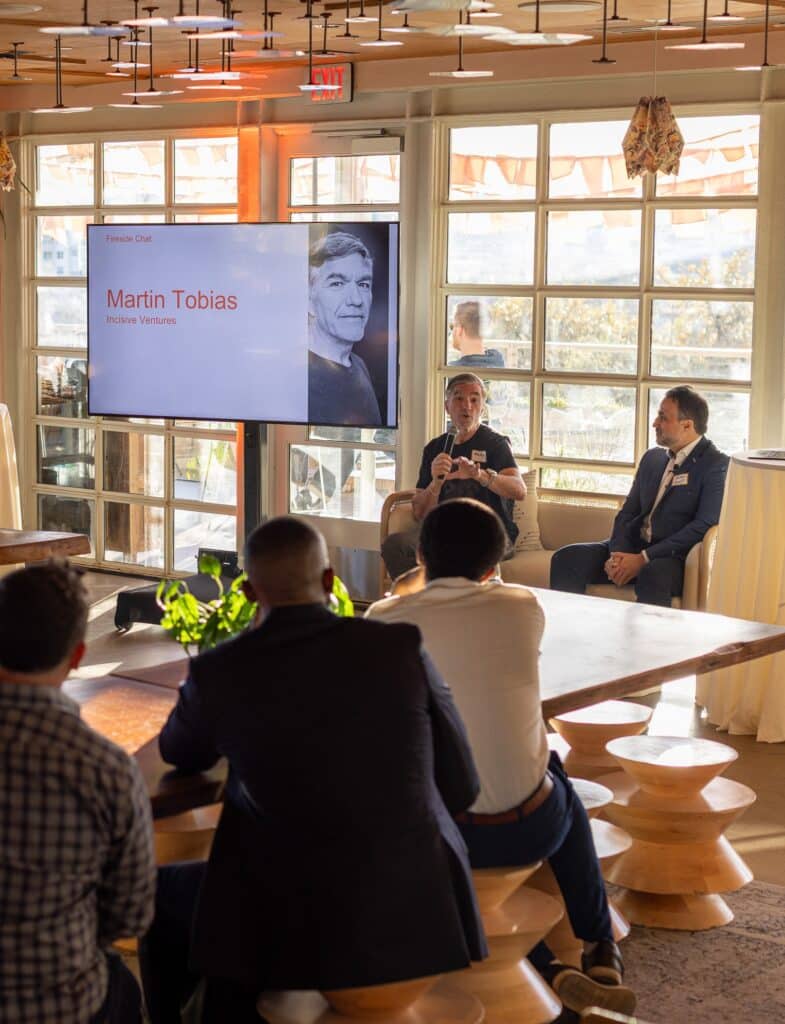
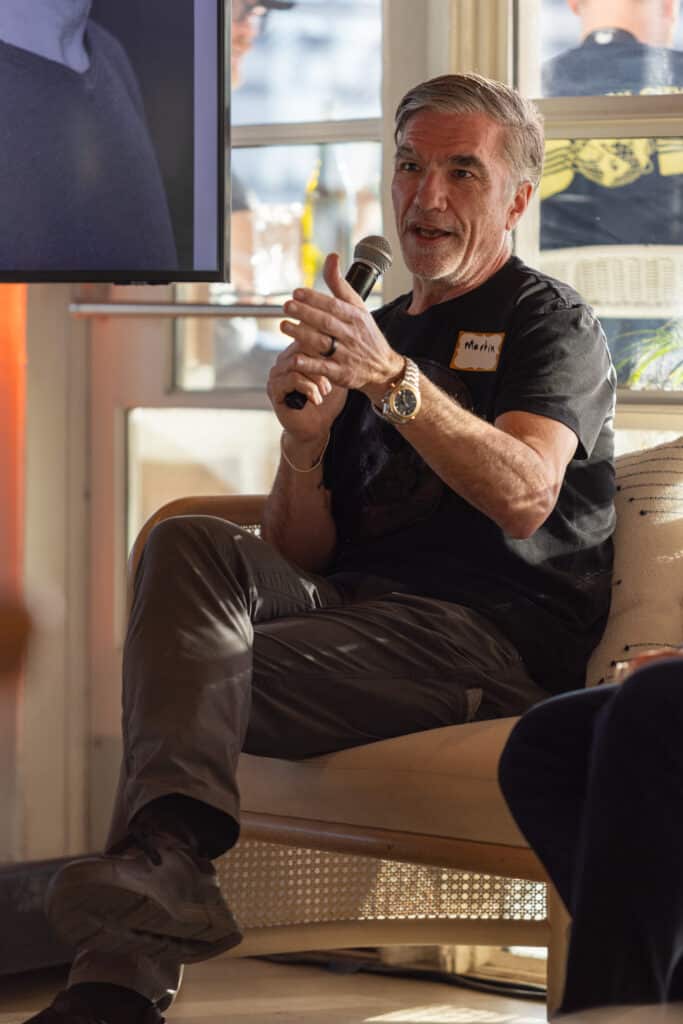
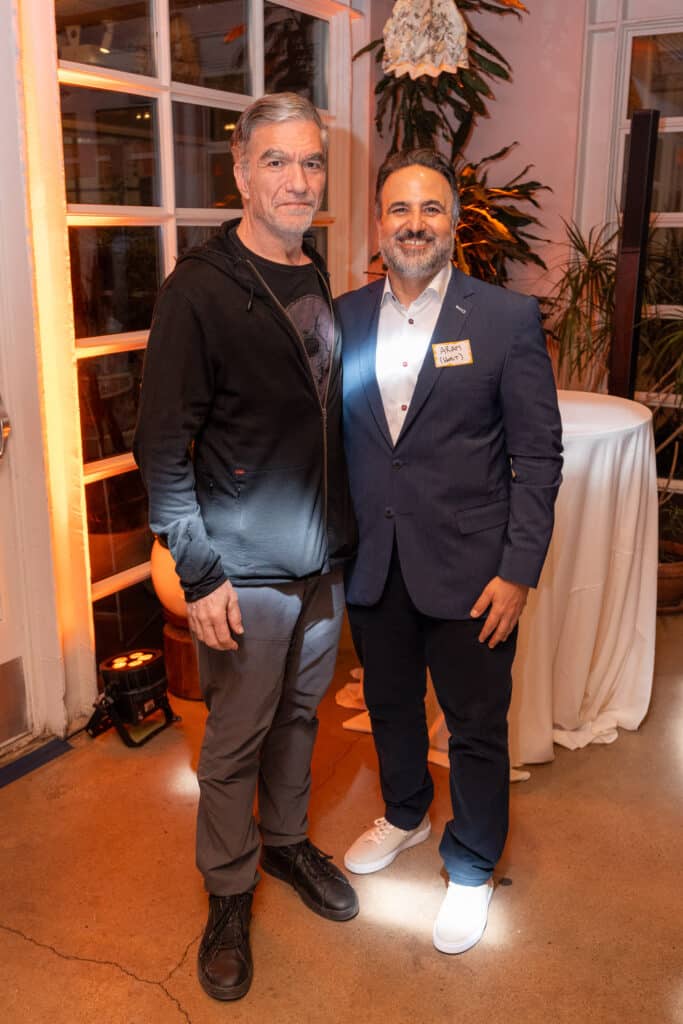
Read this interview for an unfiltered deep-dive into a VC’s mindset. We talked about how Martin sifted through thousands of pitch decks to get to 11 investments, his decision-making process, and why he invested in a Founder he met at a poker game.
Aram: Hi, Martin. How are you?
Martin Tobias: I’m good, thanks. I got bit by the vibe coding bug, and I’m coding two different apps at the same time. I like it. I used to be a programmer, and now I can program way faster. Always a bug to fix.
Aram: I’ve read your tweets over the years, started reading other stuff about you to prepare for this, and watched some videos. And I thought, why are you still coding? I saw a video where you said, “I was wondering myself what I should do,” and now you’re even coding.
Martin Tobias: I am. Mostly because I just like it, and it’s better than surfing fucking social media or watching a stupid Netflix show. I wrote the Investormatch.pro app because it was an internal tool I was using for my own portfolio. I invest in the pre-seed, then the Founders go raise a seed, and the question is, who do I send it to? I look at the deck, I can think of one or two people to send it to, but then I hit Dunbar’s number.
[Note: Dunbar’s number is the notion that the cognitive limit on a group of humans is 150 individuals.]
Martin Tobias: So I use Investormatch.pro, and it gives me 20 names. I probably know 15 of them, so it helps me make more warm intros for that company to people I already know. This thing just jogs my memory. It also helps founders.
I saw 4,500 decks last year, and I wrote 11 checks. My question is always, what the fuck do I do for the 4,489 people I said no to? So now I send them this, and maybe they can run their deck through there and find an appropriate Investor, even if it’s not me. I think that’s helpful to the whole ecosystem.
Aram: It’s really nice, because most investors never even answer.
Martin Tobias: They don’t answer. They just ghost people. It’s not helpful. This thing took a long time to code. It’s 350,000 lines of Node.js code. It’s complicated, but it’s helpful.
It solves a problem for both sides. Investors want to get more targeted companies, and companies want to get more targeted Investors. The current way of matching doesn’t help, because every VC’s website says, “we love great founders,” and every founder’s website’s like, “I’m a great founder.” This doesn’t help.
Aram: You’re right. VCs’ websites are very vague. They try to have a wide net.
[Note: I wrote about the curse of Founder-friendly VCs here]
Martin Tobias: They try to catch everything, but at the end of the day, they do invest in something. That’s what this thing does. It reads every VC’s website, all their portfolio on PitchBook and Crunchbase, reads all their social media—LinkedIn, Twitter, Facebook—and figures out exactly what they actually do. Then it semantically matches what the company’s doing to people who are investing in similar-ish type companies.
It does a better job of inferring a match by looking at people’s actions, which are more powerful than their words, because their words are what they want the top of the funnel to be.
Aram: That’s why I always tell Founders: first look at the portfolio, and then you see what they do. It sounds like you’re the kind of Founder you would like to invest in, because I read that you love Founders who are trying to solve a problem that they have.
Martin Tobias: A personal problem. This was a personal problem for me as a VC. I invest in the pre-seed, you’re raising a seed, who do I send it to? That’s a problem every time.
Aram: You said 4,500 opportunities, and you’re alone. You’re a solo GP.
Martin Tobias: I have a top 1% account on Twitter, I’ve been on a lot of podcasts, I’ve been around forever, so everybody sends me their fucking deck. I’m trying to be helpful, but I’m also trying to do it in a scalable way. That’s why VCs don’t respond: they just can’t.
I think most VCs would like to be more helpful, but they can’t be in the one-on-one email-response type of thing. It’s not possible.
Aram: What happened to me a couple of times is, I was maybe awkwardly honest, and I said what I thought, which of course was not the truth, just what I thought. A few times, I got really negative replies from Founders, and after that, I was more cautious. Founders can be headstrong, that’s what we love about them.
Martin Tobias: I don’t know. I was trying to do that to be helpful. That’s why we only charge like $20 for it. I’m trying to cover my server cost. This thing costs me like $1,000 a month to run the fucking server. I didn’t want to pay for that.
There are companies that are trying to monetize the startup ecosystem, make money off Founders that are trying to raise money. I don’t like those approaches. I don’t think that’s a very good market. I’m trying to do it at a cost break-even thing to help, but we’ll see.
Aram: When I looked at your deck and learned more about you, it seems you’ve been investing for a long time and then you decided to launch a fund.
Martin Tobias: I’ve been investing for a long time. I’m an LP in 17 funds. My first fund was Ron Conway’s Silicon Valley Angels fund, which got into Google. I still own some shares that I got in the Google IPO. My cost basis is 50 cents.
About five years ago, I decided to become an Investor full-time, and I started writing Angel checks. I have about a $2 million a year allocation to donk off Angel checks. A bunch of my friends were like, “We like what you’re investing in, can you please start a syndicate or a fund?” So I started a syndicate, then a bunch of people wanted me to start a fund.
Today, it’s possible to be a solo VC because you can buy the back office from Carta and all these other people. I don’t think 10 years ago it was practical to be a solo VC because of all the infrastructure you needed to run a fund. Now you can buy all of that as SaaS software. So, I have a fund. I’m still the largest LP in my funds.
I like being pre-seed. It’s much more friendly and collaborative in pre-seed. You don’t have the sharp elbows coming out like you do at the A, and everybody trying to fuck everybody for their fucking 20% allocation.
I’m doing 1- to 2-million-dollar rounds, and there are 2 or 3 guys my size, maybe one guy a little bigger, and you put the round together. That’s why I don’t have a bigger fund: I like the collaboration in pre-seed. That’s where, if you’re right, the highest multiple comes from.
Aram: I research decision-making, so your article “How I Gain Conviction” was interesting. You mentioned a case where a fund you know was in the round, too, that gave you additional conviction to invest. That’s to your point: pre-seed is more collaborative.
Martin Tobias: It’s more collaborative, but even as pre-seed, you have to figure out how to improve the odds every time. Me thinking of three seed or Series A investors that I’m going to send it to before I even write the pre-seed check is one way I try to improve the odds.
In pre-seed, you’re almost always doing a follow-on round. You’re almost never creating a profitable company. I’m surprised how many pre-seed VCs donk off checks without knowing who they’re going to send it to in the next round.
That’s one of the many ways I’m trying to be a better pre-seed VC. If I can’t think of at least three VCs that I’m going to send this to—understand their thesis, their check size, their stage, the kind of teams they like—why the fuck am I investing in this company? I’m not here to just take lottery tickets.
Aram: Because you’re a solo GP, you really have to trust your own judgment. You’re not bouncing off an investment committee.
Martin Tobias: That’s the reason I wanted to be a solo VC: I don’t want anybody asking anybody their fucking opinion. I don’t care. I was a venture partner at [VC Firm*], and they asked me to be a GP there with three other partners. $300 million fund. I liked them, I liked everything, but I didn’t want to have to convince three other people to do the deals I want to do.
[Note: I decided to take out the name out of courtesy. Martin didn’t ask me (he doesn’t care), and I didn’t ask him. Marked again below with *]
Aram: Do you remember if the rules were majority, unanimity, or a champion rule?
Martin Tobias: It wasn’t that hard and fast. I had been in the partner meetings, and 100% of the votes were 100%. There was no majority, and there was no clear “you get a free give-me if the partners don’t like it.” There was no structure like that.
Most people deferred to the partner because they thought the partner knew what he was doing. At the same time, there was politics. Before the meeting, you had to go pre-sell it, pre-convince people. I didn’t want to deal with that.
The other real problem with a $300 million fund: [Large Institutional LP*] was the main LP. They put some fucking snot-nosed MBA with a spreadsheet on your LPAC, and then ask you for a bunch of DEI bullshit reporting every quarter. I didn’t want to deal with people like them.
Aram: Can I ask you a few questions on your investment decision-making? I do my due diligence like you. It’s founder-centric. I’m interested in the GP’s decision-making. Going back to you having conviction: were you always like that? You didn’t care about what other people thought?
Martin Tobias: I do talk to other Investors. I do reference checks on CEOs. I talk to existing Investors. But I do my own research, and I form my own opinion. I don’t YOLO behind somebody else’s diligence.
Aram: I read somewhere you said that failure is learning. When you fail, how do you deal with that? I’m guessing you’re quite competitive.
Martin Tobias: Well, yes, and you’re always going to miss things. The second VC fund I ever invested in was a company called Olympic Venture Partners in Seattle. Olympic was the first VC that Jeff Bezos met when he came to town in Seattle, and the GPs passed. The second guy he met was Tom Alberg at Madrona, who wrote the check. The rest is history.
Every VC’s got a story of a company that they missed. I have written software that goes back and checks my decision process. For example, for the 4,489 I didn’t invest in last year, I have software that goes out and tracks them on Crunchbase and PitchBook and surfaces to me anyone who raised a material amount of money.
Then I’d go back and say, “Was I stupid for passing?” That’s kind of like self-flagellation, but I’m trying to improve my screening going forward.
So far, most of the ones that turned out well were outside of my thesis—crypto, hardware—and I agree that even though they became successful, you can’t… It’s a poor decision process if you change your decision process because of the result. If a low-probability event happens, and then you kick yourself for missing a low-probability event, you’re being stupid. Your decision, given the information you had at the time, was still correct, even though the outcome was different.
[Note: At my event, I asked Martin on the spot about his anti-portfolio, his biggest miss. After thinking a moment, he said that he couldn’t remember. After the event was over and he went back to this hotel, he sent me this email at 2.47am:
“I met Martin Eberhard when he was raising the first round for Tesla. Drove the car. Passed. Elon had not invested yet. I was not offered it when Elon invested or I would have then. That is my biggest miss. Ha.”
It’s the little things. The fact that he kept thinking about it shows something. Maybe I’m overinterpreting, but VC investing is built on signals.]
Aram: I looked at your quick-dirty checklist at the end of your post, those six points—two founders, personal story, early proof of market, etc. Some people say you have to break your mental models every now and then. Have you had any success as an Investor after breaking these rules?
Martin Tobias: You should have a thesis, and you should also know when to diverge from your thesis. I’m pretty diligent on pre-seed valuations. In Fund 1, I have 29 investments, and the average post-money is $8.1 million. I want to keep that average. I want to be price disciplined at pre-seed.
At the same time, when I look back at the six unicorns that I invested in, four of them had $20 million pre-seed valuations. They were higher. They were overvalued at every round. I know that occasionally I should break my valuation rule for really outstanding companies. I’ve done it twice in the fund. The average is still $8.1 million, but I have two companies I invested in at $20 million each.
It’s okay to break your own rule, but you should follow what you believe is a high-probability conviction thesis. You should also be willing to go outside of it for companies or founders that you believe are outliers.
The highest order bit for me: I’ve met, I don’t know, 15,000 CEOs. I can tell within the first five minutes if this new CEO in front of me is in the top 10% I’ve ever met.
Aram: What does it rely on? What are the signals you’re looking at?
Martin Tobias: Everybody asks that question, and I can’t fucking tell you. I can just tell you that I can tell. I was sitting at a table one time with Elon Musk. It was like 15 years ago. I knew who Elon Musk was, but even if I didn’t, within five minutes, you could tell that he was the smartest person in that room. It was obvious. How could I tell? I don’t know. Was it what he said? Was it his attention? I don’t know. You can just tell.
Aram: There’s this guy you met at poker. I saw a YouTube video where you talk about investing in that Founder after playing poker with him.
Martin Tobias: I think the primary skill for a good CEO is to be able to make good, risk-adjusted capital allocation decisions in a low-information environment. That’s what a CEO does. He doesn’t know who the customer is or what the product does, but he still has to decide what to build.
That’s exactly the same decision in poker. You’ve got two cards, you haven’t seen any yet, and you have to decide whether to put money in the pot. It’s the same low-information decision-making process.
I was playing poker. There was a guy who I could tell, after about 10 or 20 hands, was a really good poker player. He was making good decisions—good capital allocation decisions—in poker. So I started talking to him about what he’s building, what he’s doing. It turns out he’s a B2B software pre-seed founder. He was raising a round. Charles Hudson at Precursor Ventures was leading the round. I knew Charles. I said, “Tell me more.”
By the end of the game, I had invested in his company. I was interested in talking to him because I noticed he was very good at making poker decisions.
It’s funny, I was just playing with him on Friday night in San Francisco. Since I invested, that company has grown at 20% month over month for the last 13 months. They just raised a seed round at 4X my pre-seed price.
On Friday night, he bought into the poker game for $200 and left with $800. He 4X’d his money in four hours. It was confirmation that I had made a good decision. But the primary decision was: is the guy good at making capital allocation decisions in a low-information environment?
Aram: I don’t want to put words in your mouth, but it sounds like you had an early intuition, and then you collected data.
Martin Tobias: I collected some data, and I confirmed. The intuition was the spark: the guy seems to be making good poker decisions. Let me see if he’s also making good business decisions.
Aram: What you call the spark, I call the intuition. It seems like it’s been trained on your 15,000 CEOs. It’s pattern recognition.
Martin Tobias: It’s a pattern recognition. People always ask me, “What’s the algorithm? What’s the formula? What are the exact weights of everything?” I can’t fucking tell you. I don’t know.
Aram: It’s interesting because you started this conversation talking about your software sifting through your top-of-funnel. You also said you use software to check your investment decisions. You’re very data-driven.
Martin Tobias: Data does a 60–70% screening. I get 300 to 350 pitches a month. The software automatically screens out crypto, hardware, drug discovery, and other off-target startups. I have a B2B pre-seed thesis—guys raising a Series A or C, or for B2C… you can quickly cut the 350 down to like 60 with data. Then you read the deck on the 60, and then you take meetings with 20. The intuition really comes in once you get down to the 20.
The trick is: you want to expend your intuition on the highest probability 20 out of 350. You want to use data to help you filter the funnel to get there. I use a combination of that. At the end of the day, VC still needs to rely on intuition for the final capital allocation decision. You can screen a lot based on data, but you can’t make the final decision based on data because it’s not quantifiable.
[Note: Read my report on the role of intuition in VC decision-making for more on this topic.]
Aram: It sounds like you have a data filtering step, then intuition, then data confirming or not confirming. You have a founder-centric due diligence process. You don’t do models. How often have you not confirmed your intuition?
Martin Tobias: Plenty of times. There are lots of CEOs who are really good at presentations. Then you call their referrals, and they’re like, “I would never hire that guy,” or “all his employees churned because he’s an asshole.” Or you talk to his last Investor, and he says, “I’m not investing in him this time.” That tells you a lot.
Aram: You still make your own decision, but that’s something you listen to.
Martin Tobias: Absolutely. The last thing you want to do is get taken by somebody who’s really good at presentation. There are plenty of CEOs who are really good at giving presentations and bad at other parts of their job. Probably 20, 30, 40% of the time in diligence, I’ll find something that contradicts my personal feeling, and I’ll listen to that too.
Aram: It sounds like you’re staying clear of confirmation bias. Are you going in with a skeptical mind?
Martin Tobias: Always skeptical. Skeptical and optimistic. VC is a weird fucking thing. You are placing a low probability bet every time you write a check. You’re on the short end of the odds. The probability is you’re going to lose money every freaking check you write. Yet you still have to write those checks. It’s a weird game.
Aram: It reminds me of that quote from Vinod Khosla: VC is about optimism with a little dose of paranoia.
Martin Tobias: You want to be optimistic. You have to be optimistic to write a low-probability bet. You need some special ways to confirm your optimism. A lot of VCs just FOMO and follow the crowd, or follow on to somebody else, and use the co-investor signal. I’ve read all the research, it is not correlated to alpha. You’re doing consensus investing at that point.
You have to have an original opinion in order to have any potential to generate any alpha as a manager. Many times, that original opinion means you’re taking more risk. It could be wrong because it’s not consensus.
In pre-seed, you’re hoping to find a non-consensus idea at pre-seed that turns into more consensus at seed or the A. That’s where you get the big markups, and you get the big funds to come in and fucking mark up your shit.
The weird thing in VC is: in pre-seed, you want to be non-consensus, and you want to be right, and you want it to be consensus by the B.
Aram: That’s why I was surprised when Martin Casado said something similar a few months ago, and everyone was going crazy. It’s the Howard Marks thing: contrarian, but right.
Martin Tobias: You have to have a counterintuitive thesis early, and you have to be right. That counterintuitive thesis has to become more obvious as the company grows.
For example, with Grw AI, a company I invested in at the pre-seed, it was non-obvious at the pre-seed, but then for 13 months they grew 20–25% month over month. They put up the fucking numbers. All the people who passed on them in the pre-seed because they didn’t like it saw the numbers, and they proved them all wrong. Then they had multiple term sheets at the seed, because people were like, “Maybe this is a thing.”
Aram: I have 2,000 questions for you, but I’m mindful of your time. Martin, thanks a lot for your time!